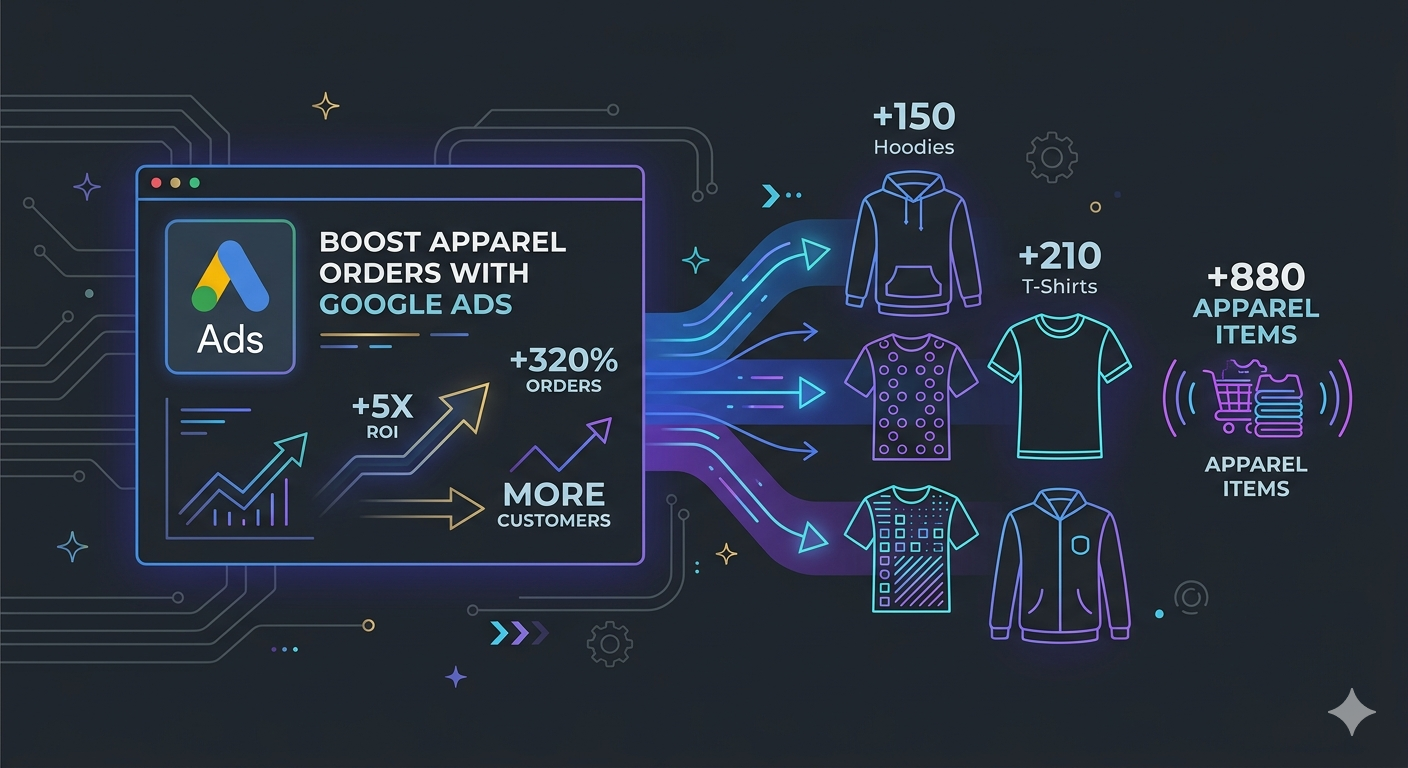
Are you ready to stop guessing and start printing profit? For screen printers, embroiderers, and DTF shops, attracting the right customers is key to sustainable growth. Google Ads, when used strategically, can be a powerful engine for acquiring high-value clients who understand the worth of your services.
This guide will help you navigate the world of paid advertising, focusing on precision targeting and budget optimization. We'll show you how to connect with customers actively searching for your expertise, turning ad spend into tangible ROI.
Understanding Google Ads for Print Shops
Google Ads (formerly AdWords) places your shop at the top of search results when potential customers look for services you offer. It's about being visible exactly when someone needs custom t-shirts, embroidered caps, or DTF transfers.
Unlike traditional advertising, Google Ads operates on a pay-per-click (PPC) model. This means you only pay when someone clicks on your ad and visits your website, making it a highly measurable form of marketing.
- Keywords: The search terms people type into Google.
- Bidding: How much you're willing to pay per click.
- Ad Copy: The text that appears in your ad, enticing clicks.
- Landing Page: Where users land on your website after clicking.
Your Digital Foundation: A Pre-Launch Checklist
Before you even think about launching your first Google Ads campaign, ensure your digital presence is rock-solid. Ads drive traffic, but your website and social media are where conversions happen.
Think of your online assets as the destination for your ad clicks. A well-prepared destination ensures visitors have a positive experience and are more likely to become customers.
Essential Pre-Flight Steps:
- Professional Website: Your site must be mobile-friendly, clearly showcase your services, display your portfolio, and have an easy-to-use quote request form or ordering system.
- Active Social Media: Maintain a presence on platforms relevant to your target audience. Consistent posting builds trust and social proof.
- Optimized Google My Business (GMB) Listing: This is crucial for local searches. Ensure your GMB profile is complete, verified, has updated hours, accurate service descriptions, and positive customer reviews.
Niche Targeting: Precision Over Volume
The approach to Google Ads isn't about broad appeal; it's about laser-focused targeting. Instead of trying to be everything to everyone, identify specific customer segments that align with your shop's strengths and profitability goals.
Niche targeting ensures your ads reach the most relevant audience, reducing wasted clicks and improving conversion rates. This strategy directly contributes to maximizing your True Shop Hourly Rate.
How to Identify Your Niche:
Consider what types of clients bring you the most profit or are easiest to serve. This could be based on industry, event type, or specific product needs.
- Local Businesses: Restaurants, small retail stores, or service providers.
- Schools & Sports Teams: Uniforms, spirit wear, booster club merchandise.
- Non-Profits & Charities: Event shirts, volunteer apparel.
- Specific Event Types: Family reunions, corporate retreats, concert merch.
Strategic Geographic Targeting
When starting with Google Ads, begin by focusing your efforts on your immediate local area. This allows you to control your budget tightly and test your messaging effectively.
Targeting within a specific radius (e.g., 10-25 miles) of your shop ensures you reach customers who can easily access your services. This initial local focus helps you prove ROI before expanding.
As your ad budget grows and campaigns demonstrate profitability, you can gradually expand your geographic territory. This measured approach prevents overspending and maintains a healthy return on investment.
Keyword Research for Niche Markets:
Once you have your niche, research the exact phrases they use when searching for services. Google's Keyword Planner is an invaluable, free tool for this step.
- Focus on long-tail keywords (3+ words) which are more specific and often have less competition.
- Examples: "custom t-shirts for local restaurants," "embroidered polo shirts corporate events," "DTF transfers for fashion brands."
- Analyze search volume and competition to prioritize your keywords.
Crafting Ad Copy That Converts
Your ad copy is your digital storefront. It needs to be compelling, concise, and clearly state your value proposition. Highlight what makes your print shop stand out.
Include a strong call to action (CTA) that encourages immediate engagement. Examples include "Get a Free Quote," "Design Your Gear," or "Shop Now."
Mastering Negative Keywords: Protecting Your Budget
This is a critical strategy for any growth-oriented print shop using Google Ads. Negative keywords prevent your ads from showing up for irrelevant searches, saving you money on clicks that will never convert.
Think of negative keywords as a filter, ensuring your budget is spent only on qualified leads. It stops you from paying for impressions on the wrong customers.
Common Negative Keywords for Print Shops:
These are terms that indicate a searcher isn't looking for custom garment decoration services.
- "Free" (e.g., "free t-shirt designs")
- "DIY" (e.g., "DIY screen printing kit")
- "Used" (e.g., "used screen printing equipment")
- "Templates" (e.g., "t-shirt design templates")
- "Jobs" (e.g., "screen printing jobs near me")
- "Rental" (e.g., "t-shirt printer rental")
Implementing Negative Keywords:
Regularly review your search terms report within Google Ads. This report shows you the actual queries people typed that triggered your ads. Add any irrelevant terms directly to your negative keyword list.
- Start with a broad list of common negative keywords.
- Continuously refine and expand your list as you analyze search term data.
- Categorize them as "exact match" or "phrase match" for maximum control.
Measuring Success and Iterating
A true growth strategist understands that advertising is an ongoing process of optimization. Monitor your campaign performance closely to ensure you're achieving a positive ROI.
Track key metrics like cost-per-click (CPC), click-through rate (CTR), and conversion rates. Use this data to refine your keywords, ad copy, and targeting over time.
- Conversion Tracking: Set up conversion tracking to see what happens after a click (e.g., quote requests, phone calls).
- A/B Testing: Experiment with different ad headlines and descriptions to see which perform best.
- Budget Allocation: Adjust your budget based on which campaigns and keywords are most profitable.
Start Printing Profit with Google Ads
Leveraging Google Ads with a strategic, niche-focused approach is a powerful way to acquire new, profitable customers for your screen printing, embroidery, or DTF shop. By understanding how to target precisely and eliminate wasted spend with negative keywords, you can transform your online presence.
Stop leaving money on the table by guessing who your next customer will be. Implement these strategies, optimize continuously, and watch your business thrive.